Congratulations on your promotion to Tech Lead
Created 2026-08-22T04:57:19.818968944Z, last edited 2026-08-22T06:54:32.187070898Z
Last Thursday night I gave a talk at the local developer meetup. As part of the prep for that I wrote a script as if I was delivering it. This was something new I tried out as I wasn't sure if I'd be able to get speaker notes on my screen with the projector (which has been a problem in the past when I've tried to rely on them).
This is just the slides that I used and that pre-written script. Of course what I actually said was quite different. I think I went a bit short on some of the early slides, and a bit (sometimes much) longer on the later ones, but the jist of what I wanted to get across should be clear enough.

- (title)
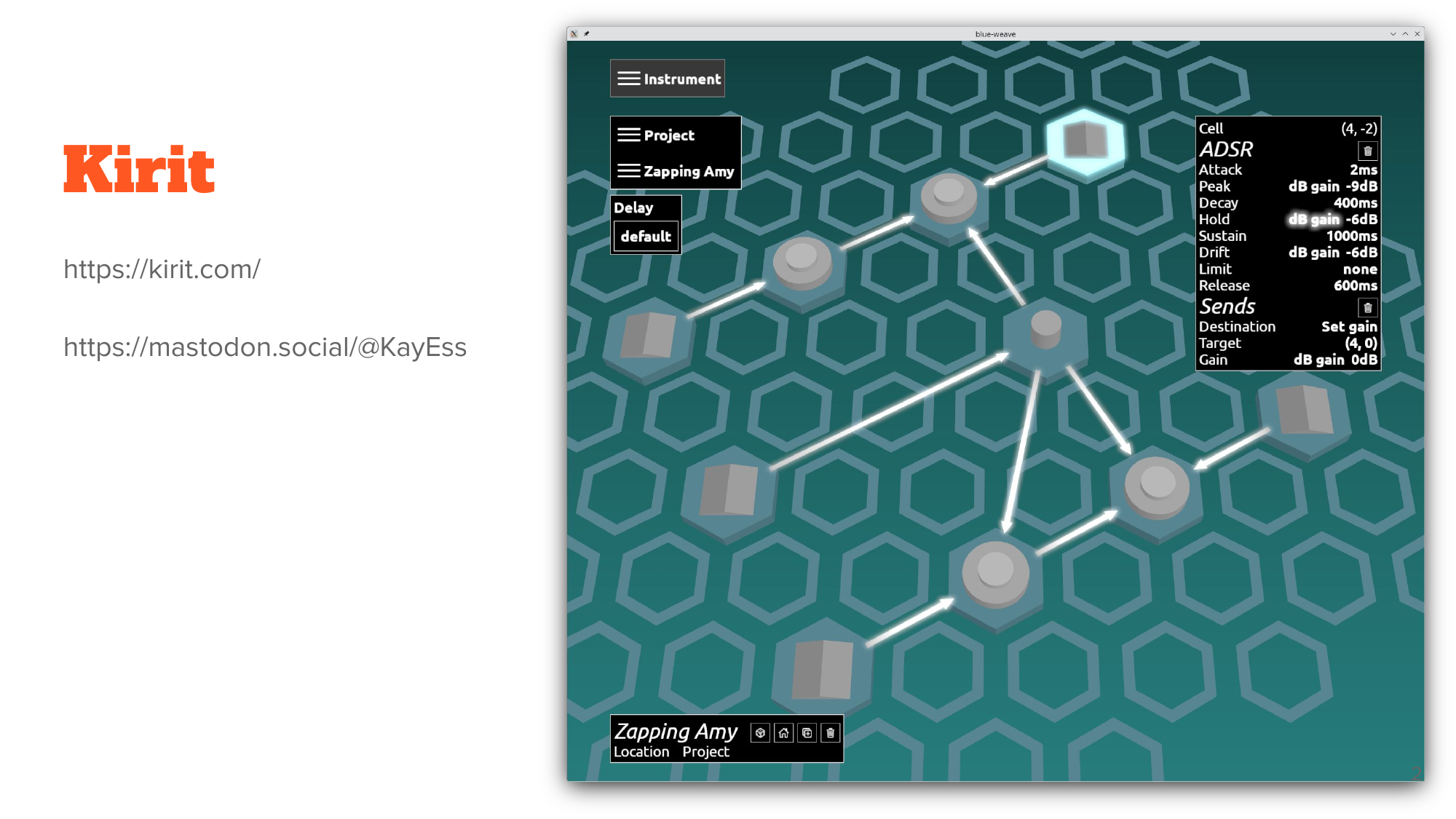
- Hi, my name is Kirit and I want to talk a bit about how we manage AI agents to do coding. (I’m also writing a synth, so if anybody wants to talk about audio synthesis and sound design come chat afterwards). I did my first paid software development way back in 1985, so I’ve been doing this for a while now and I’ve seen a few changes. What I want to talk about though are the things that haven’t really changed
- (ask questions)
- (ask questions)
- Those of us who have led teams know that shipping code that we’ve not looked at isn’t a new thing – if you’ve led a team you’ve been doing this, and as an industry we’ve always done this. AI agents are accelerating our ability to write more code, so what do we have to do so we don’t feel guilty about our inability to read it all?

- So what is it that the agents are doing? I want to draw some parallels about how agents go about their tasks and how another group of developers also go about it
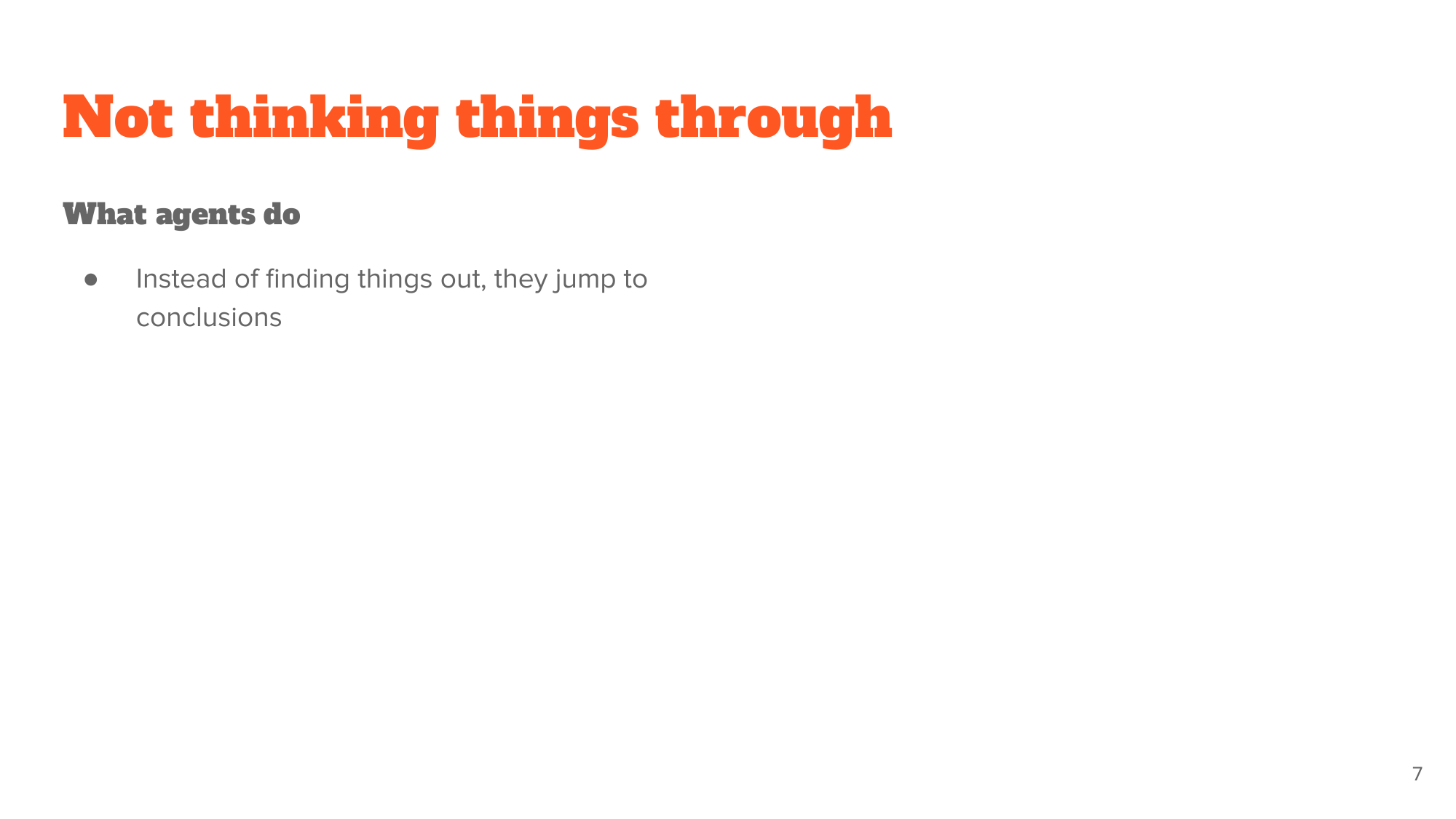
- One of the things that is very noticeable when dealing with an agent is that they have a very strong proclivity to action – they want to jump straight into a problem and start trying to code their way out of it.
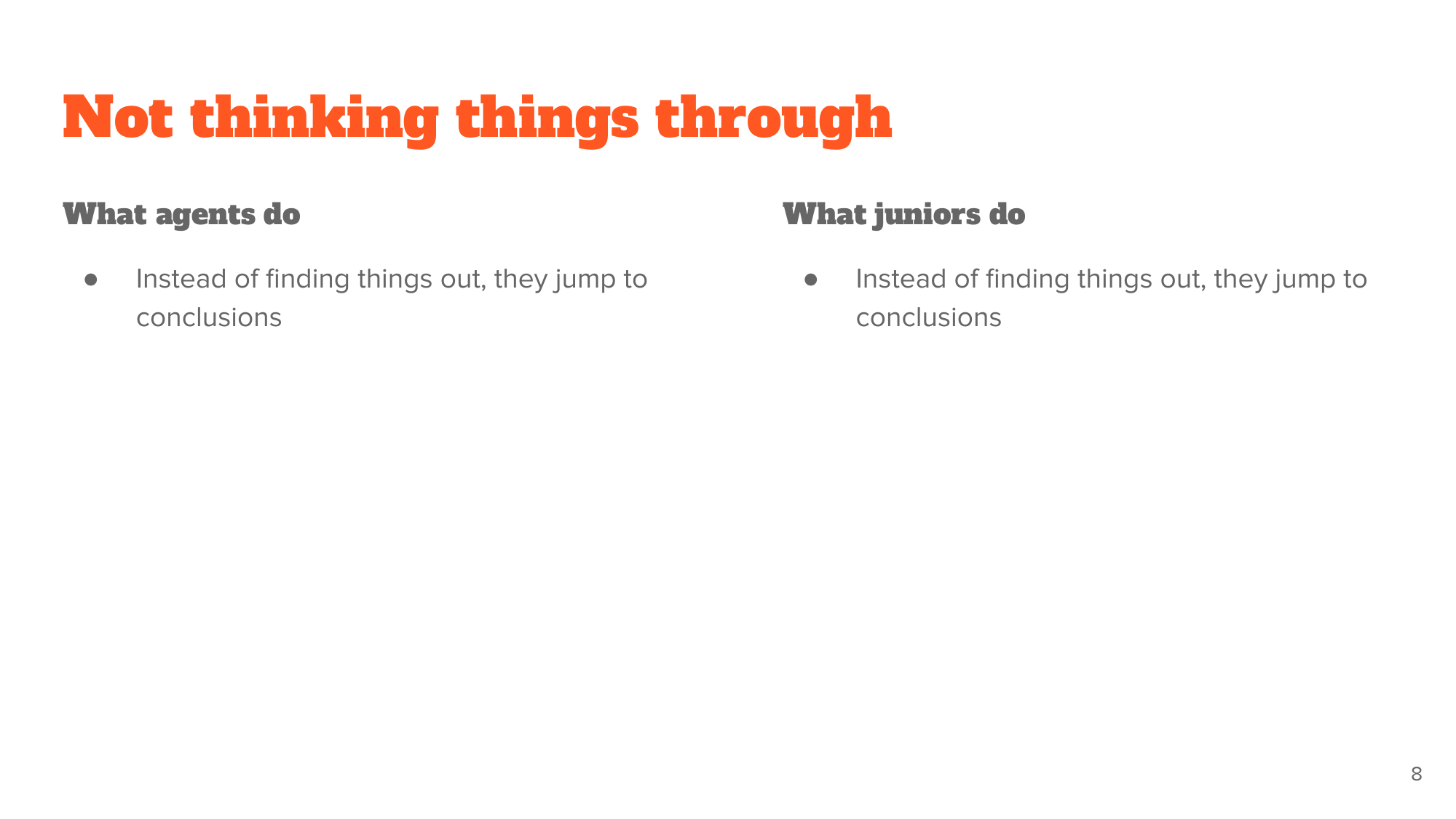
- The same happens with junior developers. They start to code the first thing that pops into their heads and run with it.
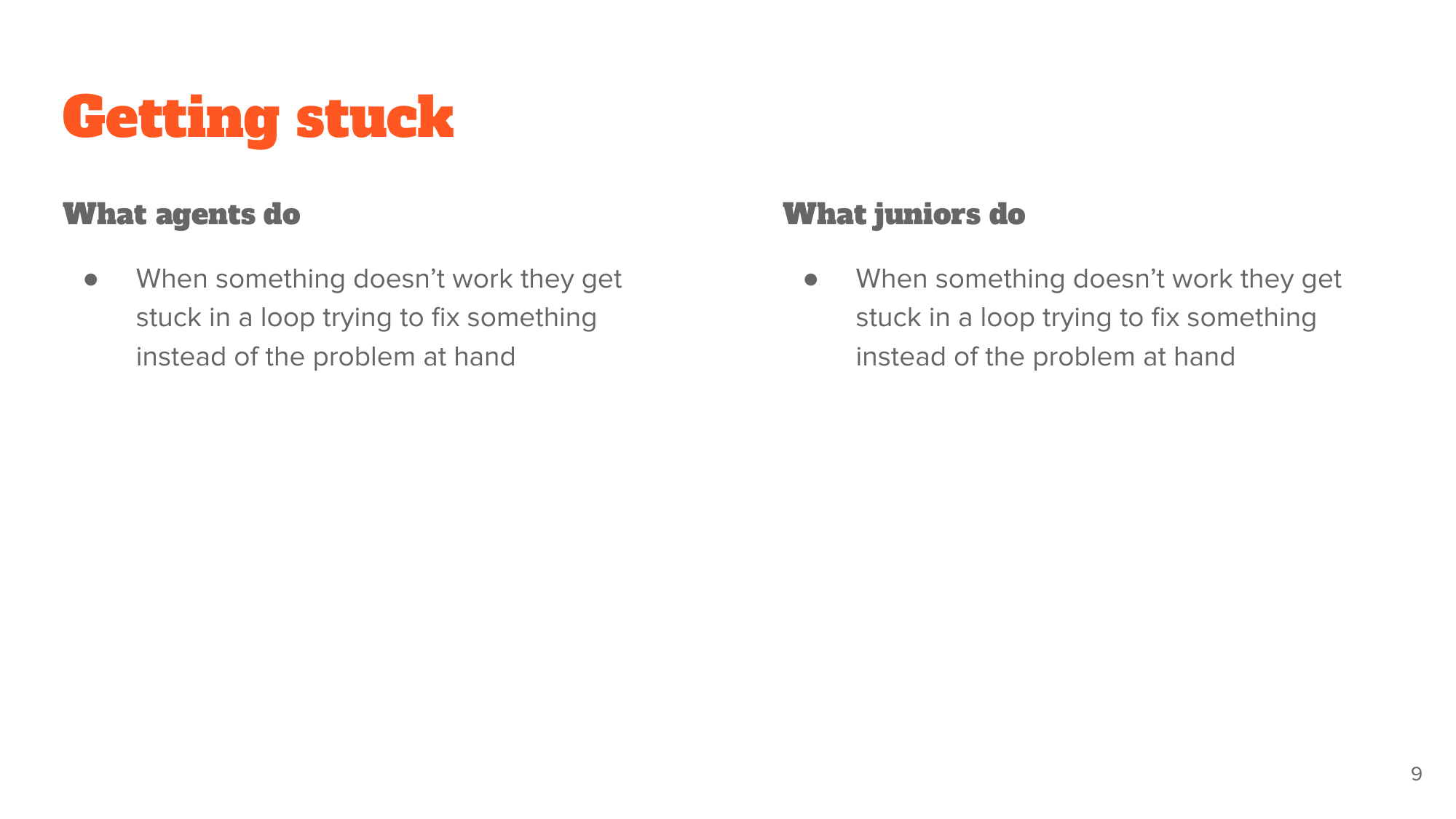
- If the agent or the junior gets stuck with this first idea, they don’t back out and think again. They keep going, trying to fix it. You see the same when some tool they were planning on using doesn’t work, they get stuck trying to fix the tool instead of re-evaluate their approach
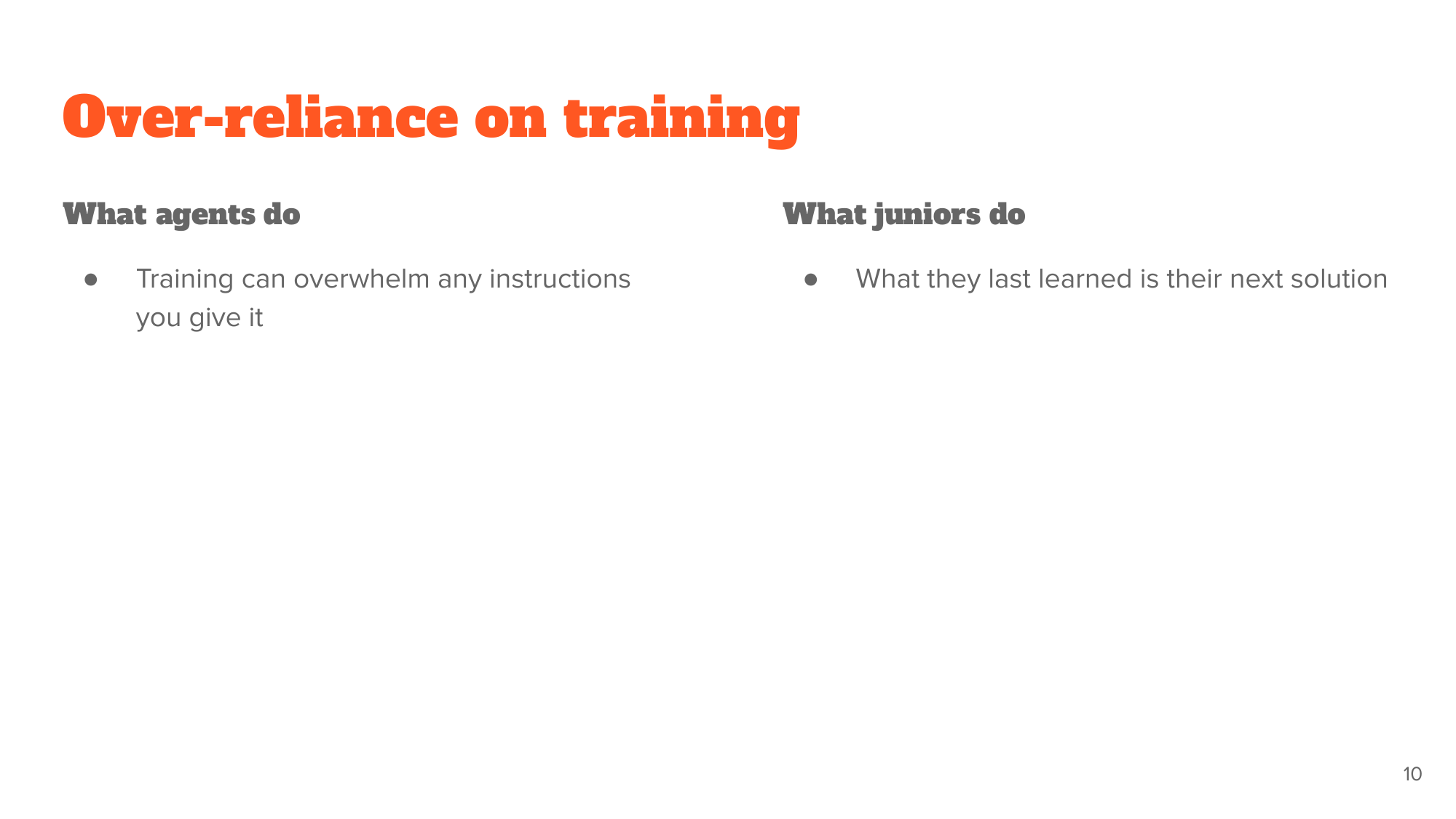
- The ideas that they do have tend to be only what they’ve seen before. Agents have a strong bias to repeat what’s in their training data, and juniors have a strong bias towards doing again whatever they did on their last task
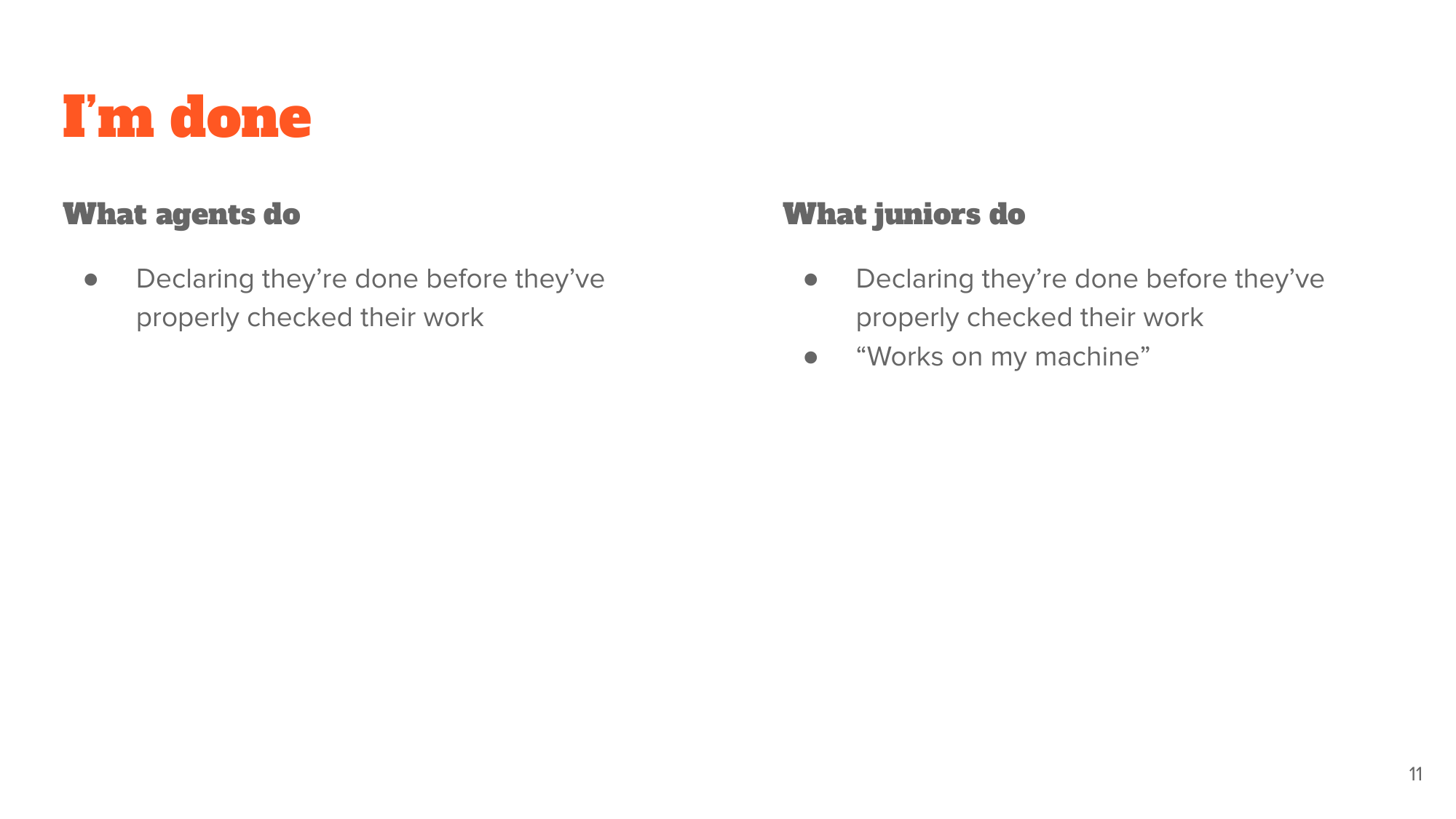
- Once they have something that appears to work they declare it done. They don’t think about their work critically, and they don’t try to “falsify” their solution – that is think about how it can be broken

- But agents aren’t exactly like junior developers
- Agents have technical limitations in their context window that we don’t see outside of small children (there’s a reason for school days being so short). Even the most junior of developers beat them out there
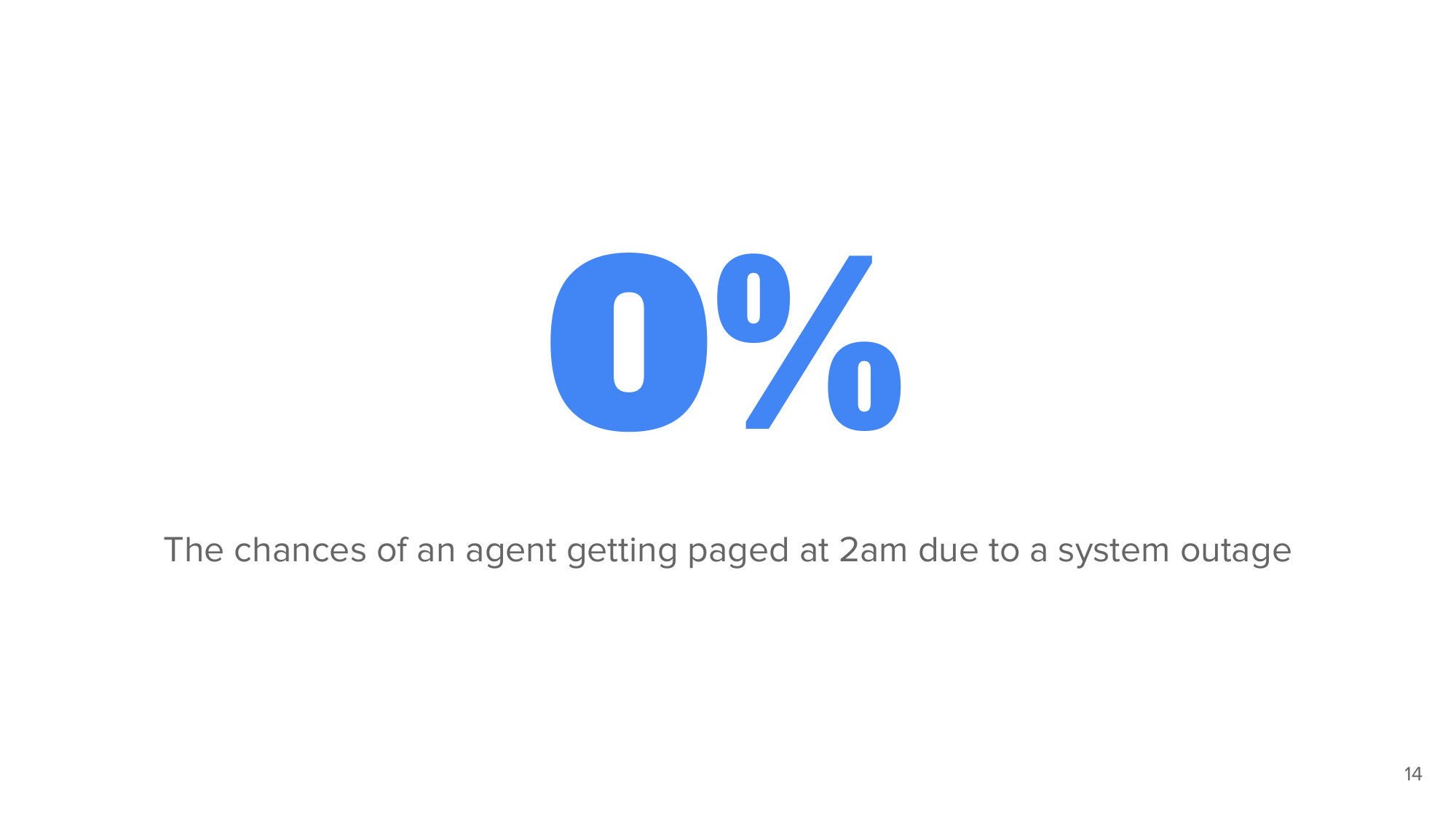
- The agent is also never the one who gets woken up at 2AM when production falls over. It turns out that being “inconvenienced” by these situations is one of the things that teaches you to do better, and (just as importantly) to insist on better
- You simply can’t get as much about the project you’re working, it’s why’s and how’s, into an agent.md file as you can hold in your own head. You can build a much stronger understanding of the project for yourself than you get across to the agent.

- So what do we do? I’m going to focus on a single thing that helps not only when you’re managing a bunch of agents, but also when you’re managing a team of people.
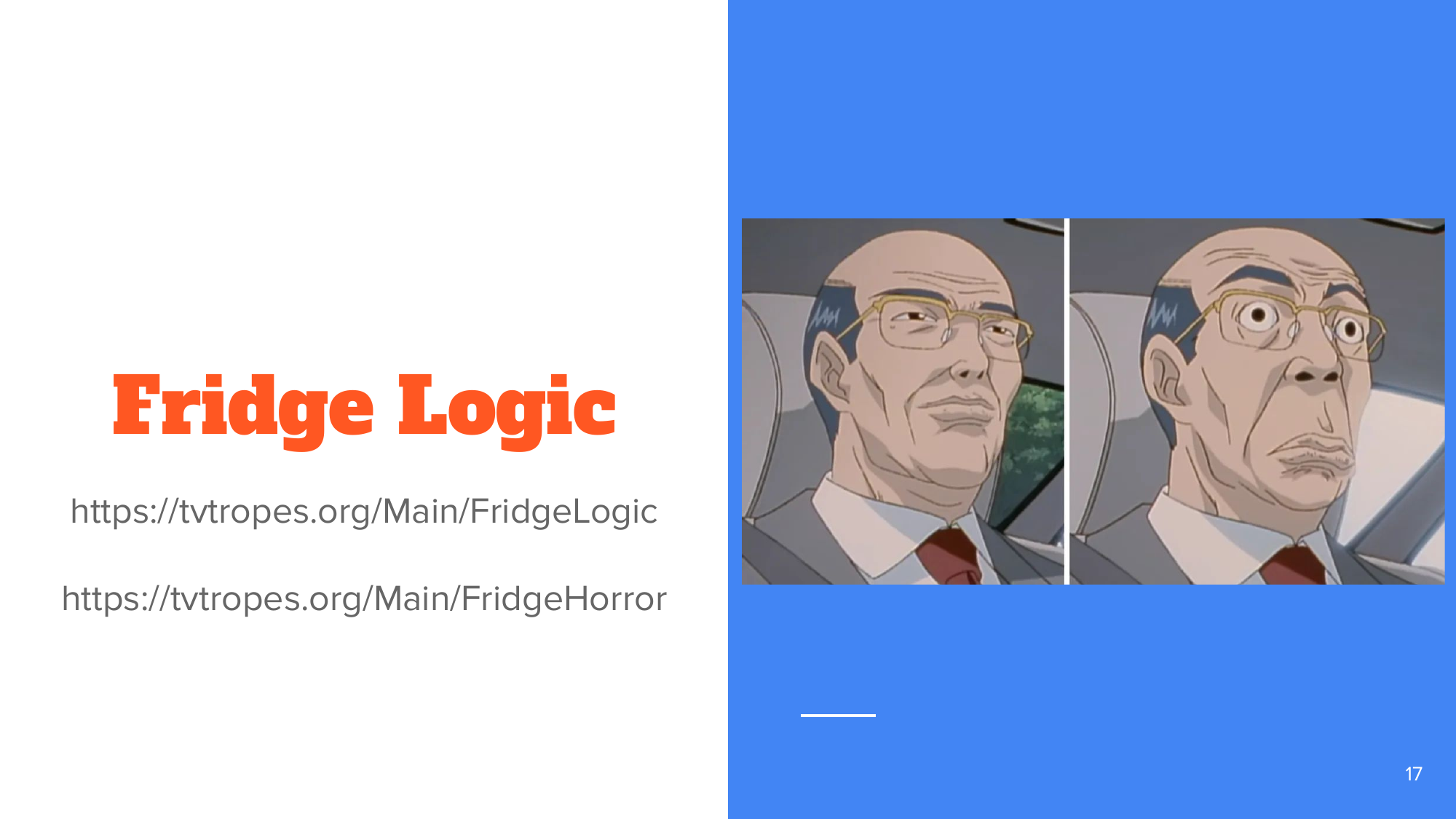
- There’s a trope in story telling about what happens after the story is over. Fridge Logic and Horror are about conclusions you come to after you’ve finished watching the film, show or reading the book and you think about what you’ve experienced. Maybe there’s something truly terrible in there

- In the Dune books (and films) we read Paul as a heroic figure overcoming his enemies and getting revenge. But is that the right reading? How does it change the more you think about it? Maybe you eventually come to the conclusion that Paul is no hero at all, for the people he leads he’s no more heroic than any other noble – just somebody else to follow who’ll likely get you killed. Maybe the real message is “beware of messiah figures”?
- The very best stories are written not just to entertain in the moment, but to give us something to think about later. The very best give us something to think about years or decades later
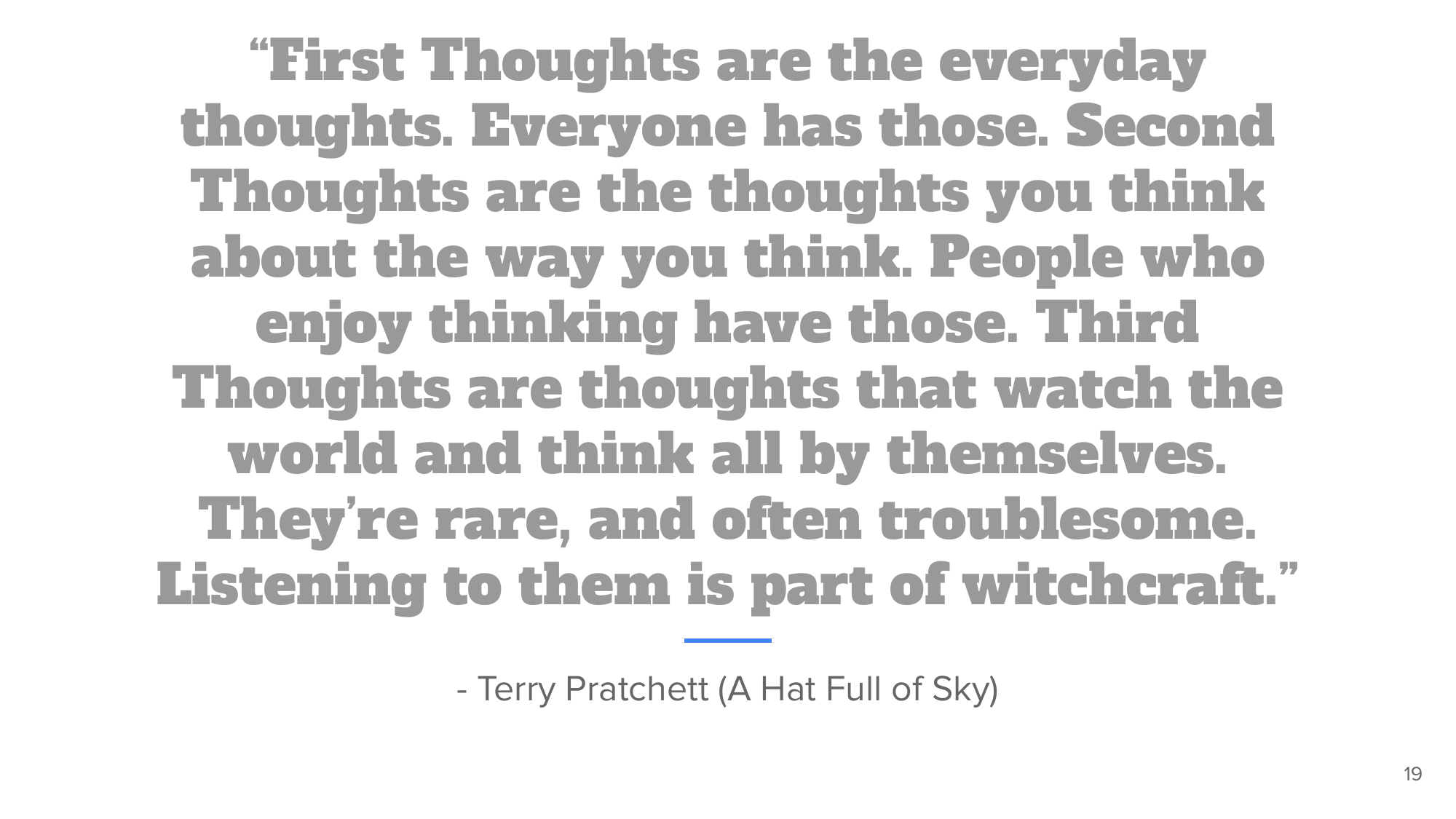
- (read quote) What Terry Pratchett is talking about is a skill that you can (and should) learn. To spend time thinking and reflecting on what you’re doing, to understand it well enough that can think more deeply about what’s around you
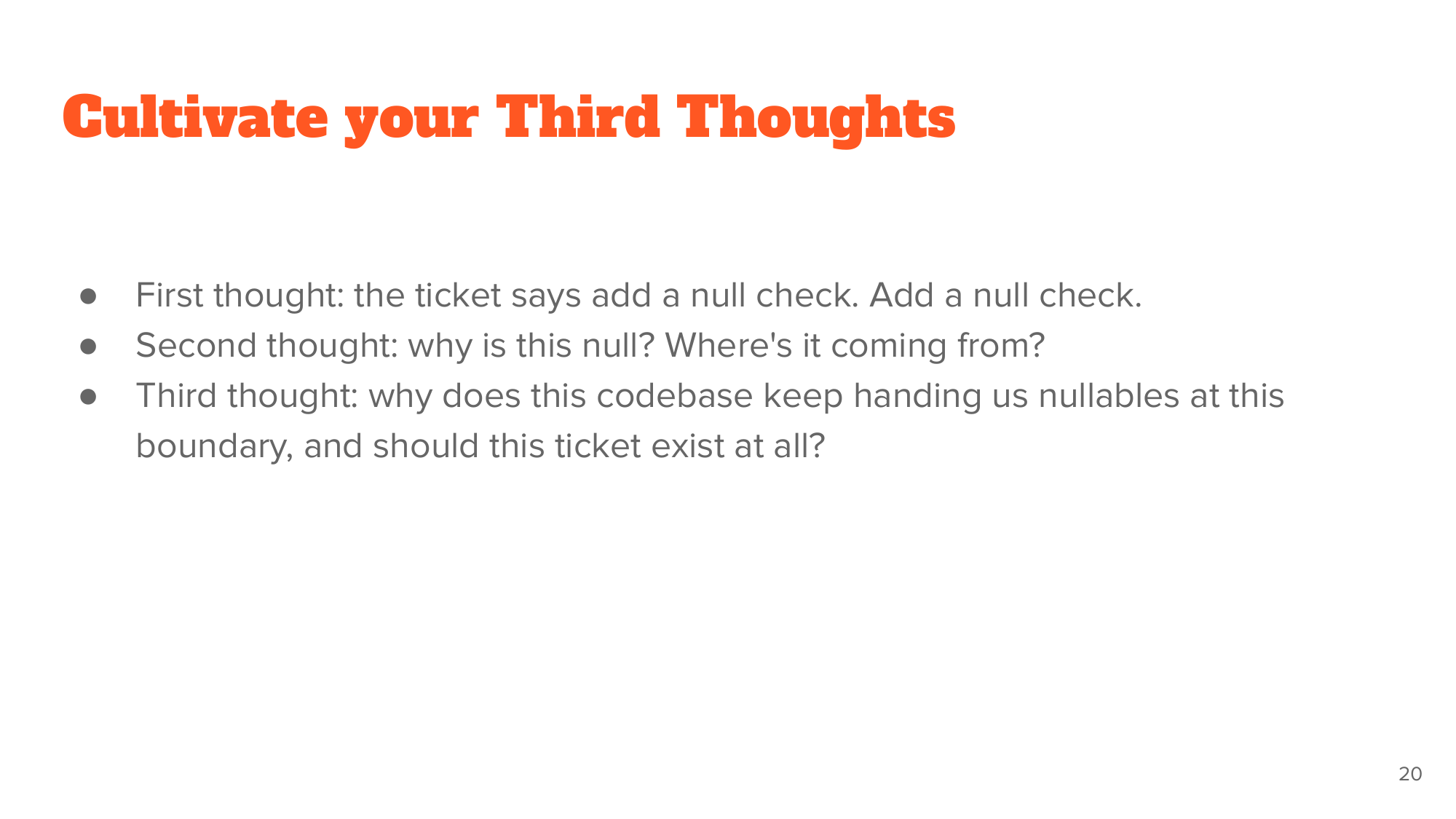
- You see a bug to fix that a NULL value is getting through somewhere. Your first thought is to fix the bug, after all, that clears the ticket and gets you to the next task. Your second thoughts might be to trace down why the NULL appears and fix it there instead. Your third thoughts might be about why there’s a NULL there at all, is there anything you can do to reject this entire class of error?
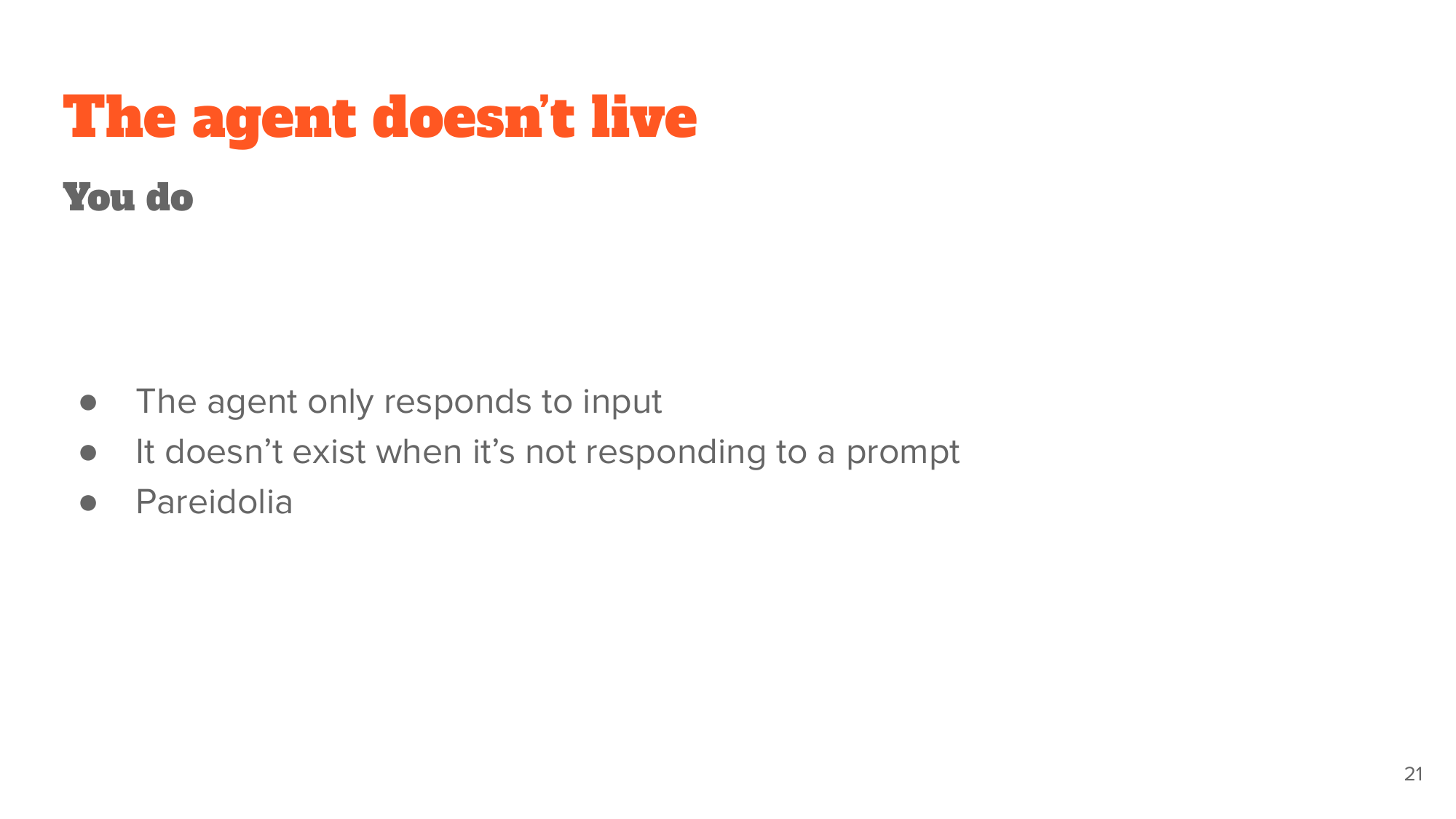
- The biggest weakness that the agent has is that it is only able to respond to an input. It has no existence when it’s not answering or responding to a prompt. It’s up to you to ask the right questions and to do the deep understanding. So to ship code you’ve not read, you need to challenge the agent (or the person) in ways that they can’t or don’t think and to fill in those gaps – this is what we’ve always done when it was just humans in the mix, and it doesn’t change now there’s agents too. But don’t think of them as human.
- Pareidolia is seeing faces in toast and in the same way, don’t confuse an LLM with anything actually human1.

- Cultivate your third thoughts. Engage in understanding the systems you work on. Engage in understanding the business that surrounds those systems support and work within. The one piece of advice I keep circling back to when asked “how do I become better in this industry” is to be “interested” (not interesting!).
- Listen and take notice of what’s going on around you and spend time thinking about it. Go manage your team!

- (questions)
I think it went over quite well. The questions at the end showed that I had gotten my point over well enough, as they were relevant to what I was saying — which was really good.
When I had these notes open on my phone they were in a numbered list (and I had the slide numbers turned on) so I could easily and quickly find the note I needed for each slide if I needed to look and make sure I'd covered what I needed. To help orient myself I also put some words in bold. This turned out to be great because it led my eye to the important bits.
So what is it that the agents are doing? I want to draw some parallels about how agents go about their tasks and how another group of developers also go about it
In the past I've sometimes gotten lost reading the notes and wasn't able to find the reminder I needed at a glance.


© 2002-2026 Kirit & Tai Sælensminde. All forum posts are copyright their respective authors.
Licensed under a Creative Commons License. Non-commercial use is fine so long as you provide attribution.